
Columnaris Disease in Fish, Bettas, etc., Correct Treatment
Aquarium Website/Forum/Blog/Search Engine Hall of Shame #6; Columnaris Disease
Updated 3/12/23
The treatment and prevention of the Aquarium (& pond) disease "Columnaris" seems to be one of the subjects of more inaccuracies than most diseases commonly confronted by aquarists.
The thespruce.com (previously about.com) has an article that is rather basic without much information, and is generally accurate in what a fish with Columnaris might show, but otherwise does provides very poor/inaccurate information for treatment or prevention.
Sadly Google's terrible algorithm gives this poor article number one ranking (beware of trusting Google in your important searches).
It should be noted that from Wikipedia and Bing to many other sites, blogs and forums this is a subject that is full of inaccuracies, such as recommending Terramycin (Oxytetracycline) as a fisrt line treatment for fish Columnaris.
The FACTS are, Terramycin (Oxytetracycline) is primarily gram positive and Columnaris is gram negative (yes Terramycin/Oxytetracycline has some gram negative properties, but that is not its strength and Columnaris is not a bacteria that respond well to this antibiotic).
Sadly, this lie is spread so much that Terramycin (Oxytetracycline) often comes up as a first choice antibiotic when in FACT IT IS NOT (AAP Yellow Powder is)!
One popular Betta site/forum (Ultimate) has an article that has a few inaccuracies in one article (often it is one inaccuracy here another there), and since it is a sad representation of what is commonly out on the internet (as of the original draft of this article), I will use it to make my points of inaccuracies about Columnaris.
Also a condescending/rude attack on me personally from Guppies.com about my full Columnaris article is addressed.
Often many websites are "cut and paste" and pick out authoritative information such as from American Aquarium's article about Columnaris, but leave out proper/legal citations and key information such as the important four steps to treating Columnaris.
In fact, as per these 4 steps found in the authoritative AAP article, it is noteworthy that an important aspect of treatment is not just getting the correct medication, but other steps that in some mild to moderate cases mean you do not even need to dump medications into your aquarium (which is step 4).
ADVERTISEMENT
HERE ARE SOME QUOTES FOLLOWED BY CORRECTIONS/REFUTATIONS:
* "Maracyn is the most useful anti-biotic"
CORRECTION:
WRONG! Columnaris is a strictly gram negative bacterium while Maracyn (which is Erythromycin) is a gram positive antibiotic.
If the author of this article or anyone had any success with Erythromycin, this is proof that the disease treated was NOT Columnaris, rather a gram positive pathogen since Erythromycin is gram positive while Columnaris is a gram negative pathogen.
The Antibiotics that have proven gram negative effectiveness and will work best is somewhat debatable, whether a combination of AAP Yellow Powder (or the lss effective Furan 2)/Kanaplex, Doxycycline, Minocycline, or others, but you will NOT achieve success with a gram positive antibiotic such as Erythromycin!
~~~~~~~~~~~~~~~~~~~~~~~~~~~~
* "Columnaris is usually more of an ulcer than a white patch"
From "Fish Tank Enablers" (Facebook)

CORRECTION:
NO! In fact quite the opposite. Hence why Columnaris is often called "Cotton Mouth Disease" & "Saddleback Disease" (for the white saddle on the fish).
Ulcers are more indicative of an Aeromonas infection which might have some similar treatments, but often quite different causes and prevention.

Unfortunately this Facebook group is typical of social media, lots of members, but short on knowledge (they kick out anyone with any real knowledge).
In the end, beware that this Facebook group is poorly moderated and has too many moderators all competing to provide an answer, rather than actually attempting to help with proven good information. I personally was kicked out because a friend called this group out for misinformation.
~~~~~~~~~~~~~~~~~~~~~~~~~~~~
* "Columnaris reproduces poorly in the presence of oxygen in the water, so keeping the water's oxygen content up by creating a current can help prevent Columnaris"
A similar statement is found in Wikipedia and another incorrect article.
CORRECTION:
This statement is also 100% false and has no basis in university level research or even simple reading of researched articles such as "Columnaris & Saprolegnia Disease"
Here is a quote from the above referenced article:
"In fact since Columnaris is strictly aerobic, the addition of more aeration/circulation will do nothing to stop Columnaris other than to possibly help the fish fight this disease pathogen."
I would also reference this university level article as well:
http://etd.lsu.edu/docs/available/etd-11112004-113024/unrestricted/Farmer_thesis.pdf
~~~~~~~~~~~~~~~~~~~~~~~~~~~~
* "As mentioned above, Columnaris loves hard water and high pH."
(a similar statement is found in Wikipedia and another incorrect article)
CORRECTION:
This statement is not as inaccurate as the other two statements, but it does show a lack of understanding of basic disease prevention and water chemistry, in particular the Redox Balance and importance of positive mineral ions in the water.
As well there is no scientific data to show the statement that Columnaris "loves hard water and high pH" (although Columnaris certainly 'loves' warm water, especially over 75 F), if anything the opposite is true based on both observations and data.
The lack of KH, resulting in an unstable pH can be a major Columnaris causing stressor. Even more so the lack of positive mineral ions such as calcium is not only a stressor, but lowers the Redox Balance and the ability of the fish to fight infections via proper osmoregulation.
What is ironic, is that this same article later recommends the use of Atison's Betta which includes calcium along with Indian Almond Leaf (& is a good product).
Personally I think the use of a mineral block such as a Wonder Shell which will keep a constant supply of positive calcium ions in the water column (unlike Atison's Spa), combined with a more pure source of Indian Almond Leaf or natural acid buffer such as Pillow Moss is a better way to go.
The facts are, if you do not correct water parameters, including lack of positive mineral ions, your chance of success treating Columnaris is considerably lower!!
~~~~~~~~~~~~~~~~~~~~~~~~~~~~
Finally, here is a rather condescending and rude personally attack where he implies I have not done my homework from Guppies.com by "Sanda" (http://www.guppies.com/forums/showthread.php/8245-The-real-deal-on-Columnaris-treatments/page2?s=268d6845a8ebf25f4375968ab5efd1bf)
"Also, that link has ODD information. Sulfa medicines are completely ineffective against FC...this has been proven in scientific studies. Metheylene blue is used for parasitic infections typically, I would add some drops but wouldn't consider it to be that great against this bacteria. The Pimafix suggestion was a bit funny, I got some laughs there...and finally, Erythromycin is dissed without actually discussing why it is so "bad" to use (gram positive indeed, but what is its mode of action?). Gram negative's don't respond too well to antibiotics anyway as a typical rule thanks to their porins. I don't know, I trust Wakabayashi's findings myself on those antibiotics...Poor water conditions ARE a cause for the disease (quick shifts=stress=disease)...It is very true though that columnaris loves oxygen. And no, a UV sterilizer will not eliminate this bacteria, or many others...Like I said, weird stuff. Has this guy done his homework and read the scientific journals published by the scientists who actually studied this disease??? "
CORRECTION:
I have used Sulfathiazole or Triple Sulfa including the combination of Sulfamethazine and Trimethoprim (found in Maracyn Plus) with many known cases of Columnaris and had measured results, as well my mentor (an Endocrinologist who was also a long time aquarium hobbyist) also confirmed these results. This said, I only note this as an alternate treatment, and not for serious cases.
 Methylene Blue is only suggested as just one ingredient in a bath, whereby part of its action is to aid the fish in recovering being a hemoglobin transfer agent. It simply is one part of a cocktail, not a single/sole treatment.
Actually often only a swab is needed (not a bath) with an external Columnaris lesion using Merbromin (due to its permanence, and lethality to bacteria, Columnaris in particular) along with an "in water" antibiotic.
This Sanda guy needs to learn to read completely before he makes statements.
Further Reading: Aquarium Fish Merbromin External Columnaris-Bacterial Treatment
As for Erythromycin, I note in many places, including links to my other articles as to why I do not recommend Erythromycin (as per its mode of action). As well I should note that I have used Erythromycin MANY times with no effect and it is this particular drug I brought up in my first discussions with Dr. Herzog as to why it did not work!!
Again, this guy needs to read before he criticizes others life work and research
As for the UV, this is an incredible statement, as it is well known that a true UVC Sterilizer, properly set up will kill Columnaris in the water column.
As well much research of late into Redox shows that UVC improves immune response.
His extremely condescending response about Pimafix was simply disgusting. The article only suggests this a mild treatment, and then again only as a PART of other steps too.
I hardly recommend it for anything moderate or especially serious.
Yet for mild treatments I have confirmed that it adds to the effectiveness of the treatment regimen.
Finally his final condescending/rude attack on me and my article shows his extreme liberal arrogance.
The FACTS are I have conducted controlled and many, many observed tests on Columnaris for over 3 decades, as well I continue to research and cite my references in this article, not to mention my consultation with Dr. Herzog many years back.
Frankly this guy is a real piece of work!!!!!!
~~~~~~~~~~~~~~~~~~~~~~~~~~~~
SUMMARY;
The bottom line is if you are truly interested in treating and preventing Columnaris, I would ignore many of the inaccurate articles (sadly including Wikipedia) about Columnaris and read one of the few articles based on real world "hands on" experience (since 1978) and further research, and that article is:
Columnaris
Also beware of websites that are nothing more than shills for advertising, especially with links to Amazon (often for products taht are not best to use).
The "Spruce" and Fish Labs are two popular sites are set up primarily for advertising/affiliate revenue (although I will admit that Fish Labs article on the suject is one of the better, however then they utilize information from the AAP article as per the use of Nitrofurazone along with Kanamycin which this method was first published online in 2005 by AAP, but they do not cite this as a reference which is frankly WRONG).
Further Information Reading from Aquarium-Medications.Com Information:
*Oregon Grape as Potential Columnaris Aquarium Fish Treatment
*Triple Sulfa & Sulfamethazine; For Aquarium, Pond
*Nitrofurazone, Furan 2; For Aquarium, Pond
Recommended Aquatic Sites for Information, Products
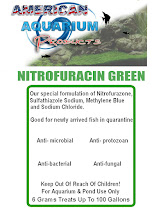
Our special formulation of Nitrofurazone, Sulfathiazole Sodium, Methylene Blue and sodium chloride.
Wide spectrum. Anti-microbial, anti-protozoan, anti-bacterial, anti-fungal. Good for newly arrived fish in quarantine situations.
Also good for healing wounds and ammonia burn on newly arriving fish. Works well for sores on fish in Koi ponds..

YouTube; How to: 4 Steps Columnaris Treatment Fish Bacterial Infection
This video goes over the basics of the full four step plan of properly treating Columnaris in aquarium fish and is a compliment to a FULL reading of this article.

AAP Professional Aquarium & Pond Medications
This video covers arguably the best aquarium treatments available anywhere in the world!
*AAP Merbromin/Wound Control
*Aquarium Redox Balance

Aquarium Chemistry
*Aquarium Nitrate Control

Aquarium Light Information, Help
The most in depth and regularly updated article available FREE on the Internet!

Aquarium UV Sterilization; Complete Sterilizer Use Information
TMC Premium Fluidized Sand Bed Bio Filters
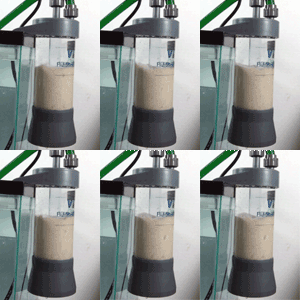
Premium, second to NONE Aquarium Bio Filters, that with Oolitic Sand also maintain essential marine aquarium calcium levels, alkalinity, & electrolytes that are important to ALL Marine life, Goldfish, African Cichlids, Livebearers & more

Eheim Everyday Automatic Feeder
The EHEIM Everyday Fish Feeder is a compact fish feeder with actively aerated feeding chamber.
Copyright; Steven Wright & Carl Strohmeyer
Labels: Betta Columnaris, Betta Forum, Columaris, Columnaris Disease, Fish Disease, Fish Tank Enablers, Guppies.com, Identification, Inaccurate Information, Ultimate Betta, Wikipedia
posted by Carl @ 12:01 PM
4 comments


 Aquarium Lighting
 Reverse Osmosis Aquarium Water Filters

4 Comments:
Ahh! it would've been much wiser to read here first (as I know from experience that your advice can be trusted) rather than reading 20-30 internet sites that ALL advised to treat Betta Fin Rot with Maracyn. Now I'm here, 2 weeks & a still sick fish later, ordering the correct meds & understanding why they are correct...
Diane; Honestly, naming these other internet sites so that others might know to avoid.
Frankly there is NO EXCUSE for recommending a gram positive medication for what is a gram negative infection, this makes about as much sense as tell someone sailing west from California to go no farther than Hawaii or they will fall of the edge of the world.
Shame on these websites!!!
Maracyn "2" is a gram negative and works excellent.
The only problem with Minocycline (Maracyn Plus) is that the water conditions that are best to prevent/treat Columnaris are also contradictory to optimum effectiveness of Minocycline.
Also Minocycline is both gram negative and gram positive
Reference: Aquarium Medications Part 2; Minocycline
Post a Comment
<< Home