
Melafix Dangers; Betta, Labyrinth Fish, Pencil Fish
Updated 1/10/19
Possible Melafix, Pimafix Dangers with use for Gourami, Betta, Pencil Fish
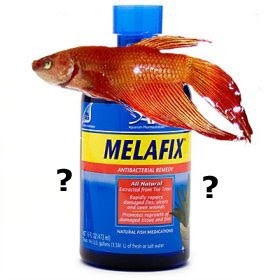 A few years back it was brought to my attention that there were real or possible dangers with Melafix via an email I received.
Suggested Product Resource: Melafix from AAP
I then researched (via specific Blog/Forum searches) to get some background about the complaints which stemmed from use with Labyrinth Fish such as Bettas as well as Pencil Fish.
Further Betta Information: Betta Splendens; Care & Information
I then spent more time in university level research, mostly looking at veterinary and human studies of the known ingredients in Melafix (TTO/ tea tree oil) which in the case of Melafix, is NOT from the more researched Melaleuca alternifolia, but is from the lesser researched Melaleuca leucadendron version of TTO, more correctly identified as cajeput oil.
~~~~~~~~~~~~~~~~~~~~~~~~~~~~~~~~~~~~~~~~~~~~~~~
ADVERTISEMENT
Some Background
Although I have extensively used and tested Melafix on many Labyrinth fish (in particular Bettas) and not found these results that some are claiming.
This does NOT mean these persons are making up the results, this just indicates that there are more than one factor in this equation, such as a chemical trigger, incorrect disease diagnosis, less than optimum water parameters, etc..
I also know of many other aquatic professionals that have not observed the deaths in Labyrinth fish/pencil fish, but again this just tells me that we need to look deeper and not make non-scientific knee jerk proclamations based on anecdotal evidence which often all too common in this hobby, even by well meaning aquarists!
In other words, I suspect that what has become all to common in our hobby, especially in groups and social media is that scientific method was NEVER followed!
An important point, which I will cover in more depth later, is that Melafix is primarily for minor wounds & gram positive bacterial infections, NOT serious infections.
WHY IS THIS IMPORTANT?
From my experience in the professional aquarium maintenance industry since 1978, often persons will treat with the wrong medication and then when their fish die, blame the treatment rather than realize that they used the wrong treatment in the first place!!
Back to the reason for this article;
In one such forum (Fish Lore) one member stated that the "oils" in both Pimafix and Melafix are dangerous to Labyrinth due to the need to "breathe air".
If this is the reason aquarists are contributing to Melafix, I can correct this in that part of the patent for Melafix (& Pimafix) is the process of refining of the oil out of Melafix (& Pimafix).
This can EASILY be proved by adding Melafix or Pimafix to the water and watching for it to float on the water, which it does not.
HOWEVER before implying that this member in the before mentioned forum does not know what she is talking about; Melafix can and does cause foaming, which at least in theory could be a problem with certain fish or more likely allowing for "consumption" of the TTO where the chemical reactions likely take place.
BTW, my using Fish Lore is in NO WAY an indictment on this forum, I have read many of their articles and forum posts, and many are reasonable, albeit at worst well behind better research with "cut and paste" in a few articles (such as UV Sterilizers Use & the Aquarium Nitrogen Cycle).
Researched References:
*UV Sterilizer Use; Ultraviolet Sterilization
*Aquarium Nitrogen Cycle, Why NOT to use Raw Shrimp Cycling
It is noteworthy that they made an updated post that is more accurate, however it still ignores the real causes of real or perceived Melafix Dangers.
Omitting this valuable piece of information leaves me scratching my head especially when one considers the amount of misinformation that is truly disseminated in many aquarium articles such as the discredited Raw Shrimp Cycling method.
Many persons/forums also make similar mistakes of omission with Malachite Green.
CURRENT RESEARCH/HYPOTHESIS
From: Aquarium Medications Part 4, Melafix, Pimafix, Usnea
First I will start off in pointing out that so much which has been said about Melafix or Bettafix dangers with Bettas and other Labyrinth Fish is based on observations, often by persons with little or no knowledge of how medications work or water chemistry and its effect on these medications.
Unfortunately, even in the before mentioned forum one important point was not brought up and that is that Melafix is primarily effective only with minor injuries and gram positive bacterial infections.
This is worthy of note since MOST aquarium infections are gram negative and using a product such as Melafix for a disease such as Columnaris will likely result in failure.
Reference: Columnaris; Treatment, Identification of this Gram Negative Aquarium Fish Disease
So unfortunately the observation could be made that the medication killed their fish, which of course is totally incorrect (especially when Melafix or Bettafix is overdosed)!
Now that is not to say that some of these anecdotal observations were incorrect and that Melafix did indeed kill their fish (still generally in an extreme overdose), however there is a water chemistry explanation for this too, so please read on!
Currently the best scientific information shows that there may be link between the tea tree oil in Melafix and toxicity in Labyrinth fish/Pencil fish, but this link is NOT what many are anecdotally assuming.
The best information points to liver function, which would explain why some (such as myself) have not observed these problems in our tests (admittedly the studies did not focus on over doses).
How is Melafix Toxic in Certain Water Conditions?
Basically Tea Tree oil (Melaleuca leucadendron and Melaleuca alternifolia) is a phenol-containing essential oil.
Its active ingredients are cyclic terpenes which have a similar structure and action to turpentine (a KNOWN liver toxin).
The acute toxicity for the major terpenic compounds (linalool, ocimene, alpha-terpinene, 1,8-cineole, terpinolene, camphene) is 2 - 5 g/kg body weight, which is considered a moderately toxic range.
From a toxicological point of view Tea Tree oil is comparable to oil of turpentine, which is readily absorbed from the gastrointestinal tract and then finds its way to the liver. What may be the problem is that under certain conditions Melafix may be toxic to the liver in Labyrinth fish/Pencil fish.
My current research and hypothesis, is that since the best research shows similarities between TTO and Turpentine (both are terpenes), is that in an acidic environment, in particular an environment with nitric acid or other acids as a result of organic decomposition such as carbonic acid, the chemical reaction can produce chemicals that may harm the liver in certain fish that have a tendency to ingest the water around them such as Labyrinth fish/Pencil fish (via the surface).
Certain terpenes such as turpentine are actually explosive when combined with nitric acid (this chemical reaction is used in rocket fuels!). On a VERY small scale (aquarium environment) some similar reaction may be happening that with certain fish can cause death.
This would also explain why this problem has never been noted in marine fish even though they constantly drink the water around them, since marine fish are always kept in an alkaline environment.
This would also explain why this reaction has not been observed in my tests with Melafix (even at double doses) with Labyrinth fish/Pencil fish since I conducted these tests in a balanced Redox mineral/electrolyte environment.
At this point my advice is to maintain proper mineralization and Redox, which is something I have been a big proponent of for many years now based on scientific evidence of the benefits therein.
If my hypothesis is correct (which ongoing testing continues to bear out) this may be the link in this problem, especially since the TTO found in Melafix (and all terpenes) is a known Redox reducer and an acidic/oxidizing environment of ANY cause could cause possible undesirable effects.
Product Resource for Aquarium Mineralization:
Wonder Shell Mineral Blocks; Unique Version ONLY at AAP
I recommend reading these articles:
*Importance of Minerals, Electrolytes, GH, KH in Aquariums
*Aquarium/Pond Redox
MELAFIX SUMMARY:
Many tests have confirmed my hypothesis (although I would not state this in a "the discussion is now over" sort of way).
The water Parameters hypothesis/possible conclusion certainly makes more sense than simply blaming Melafix for unexplained fish deaths when many tests with these very same fish have not yielded the same results.
The ultimate conclusion may also NEVER be found, but this does not mean that Melafix should never be used.
This is similar to many anecdotal comments about Malachite Green and its use that ignore the affect water parameters have on its dangers or how high amounts of calcium can render Tetracycline useless.
Think about Tylenol, this is generally considered a very safe medication for humans, yet mixing with alcohol (especially in increased dosages) can cause liver failure.
Does this make Tylenol a product that should never be used? Of course not!
This goes for Melafix and Bettas, if you are using this product with Bettas, make sure that your KH is above 50 ppm, your GH is above 150 ppm, & pH is above 6.5 (or better above 7), and you should not have a problem.
I should also note that one theory that has been noted by many is that these problems with Melafix are the result of overdose with sensitive Labyrinth fish/Pencil fish, however (as noted earlier) my use and my colleagues tests cannot confirm this as with correct water parameters we have successfully doubled the Melafix dose with Bettas without any problems.
This is obviously another case of where anecdotal observations are being made without placing other factors into the equation. This is not to say doubling the dosage is good, but that doubling the dosage with poor water parameters (low KH, minerals, etc) is the likely combination that can kill.
That said, I think Melafix is often over used for way too many aquatic problems where even though it may be harmless, it also may be useless.
By using Melafix where there is NO chance of successful treatment such as with Columnaris in Bettas, the aquarium keepers is wasting valuable time where treatments that can cure the infection should be being used.
However one thing is for certain and that is there is some trigger that causes this problem; otherwise one can not explain the use of Melafix at up to double dose without the deadly results some aquarists are observing.
In the mean time, I think many can continue to use Melafix as the first aid treatment is was designed for, not as a treatment for any serious aquarium or pond fish infection.
Please reference for further Information:
“Aquarium Medications Part 4”
My suggestion is to not use products such as pH Down (which honestly should not be used anyway) or any other product that may add acids to ones aquarium while treatment with Melafix is under way.
Make sure your pH is at least 6.5 or higher and would recommend the use of products that buffer your aquarium if pH is not stable (such as SeaChem Alkaline Buffer) and add minerals/electrolytes such as Wonder Shells (which come in sizes for Betta bowls as well) or Replenish.
Recommended Product Resources:
*SeaChem Alkaline Buffer
*Unique Wonder Shells; Only from AAP
*SeaChem Replenish
The Bottom Line;
Basically Melafix is best used for external wounds, and other minor EXTERNAL & gram positive infections where there are proven results in many cases, however for diseases that go systemic (which most gram negative infections common in aquariums often do), Melafix is TOTALLY USELESS.
Using Melafix for Columnaris or similar more serious gram negative infections is analogous to using Neosporin for a 3rd degree burn and then blaming the Neosporin for someone's death after receiving 3rd degree burns.
Sadly though, this is just the type of poor logic that has gone into many of these "Melafix Betta Dangers" articles that come up in internet searches!!!
Reference: Columnaris & Fungus in Fish
I would also add to those who read this and might think I am an apologist for Melafix (or their maker API) because I have sold this product.
Well I am not and anyone who knows me since this product has come out also knows I rarely recommend it but for the few minor fish issues I just previously noted.
I am just tired of the junk science put forth in so many place on the internet often by persons with a couple years aquarium keeping experience with 10 gallon aquariums and no professional knowledge or training!!!!!
I will also add in summation that blaming Melafix for your dead fish (which may be correct, but in most cases is based on VERY subjective evidence) is lazy/poor science.
For example I had an email in February of 2011 from someone who read one of the internet articles critical of Melafix. This person wasted valuable time attempting to get rid of the Melafix in their aquarium when further questioning revealed that they had poor water parameters (incorrect mineralization & KH) and the symptoms described a classic case of Columnaris (which Melafix is ineffective for treating).
I cannot be certain whether the Melafix killed their fish by virtue of the incorrect water parameters or more likely due to the Columnaris infection.
However what I am certain of, is that if this person had correct water parameters (which are proven to both fight and prevent Columnaris) and/or treated with the correct medication, these fish would be alive today!!!
Instead this person (by their own admission) wasted valuable time incorrectly attempting to lower pH and GH, and then attempting to remove the Melafix, this based on incorrect advice they had read on the Internet
For this reason, be wary of the plethora of websites that cut and paste information, often anecdotal that incorrectly places blame in the wrong place, often with the end results being our finned pets death.
In fact this is the point of this "Fish as Pets" website; to provide aquatic news and counter misinformation often pasted in Internet websites and forums.
PIMAFIX
Although this article is basically intended to address concerns about Melafix, I will also address concerns about Pimafix that I discovered when researching forum/blog posts.
Recommended Product Resource: Pimafix from AAP
The concern was with Pimafix is that it contains refined Clove Oil (refined so as to dissolve in water). Many aquarists warn against the use of Pimafix for this reason, HOWEVER I think this is a knee jerk reaction with NO scientific studies to back this up.
Of course continued use of Pimafix with no water changes or use of carbon for removal could certainly allow for dangerous Eugenol (the active ingredient in clove oil) buildup, but then ANY treatment when abused can be dangerous!
I found one such reaction in Fish Lore by a person who seems quite knowledgeable, but in this case is making non-scientific anecdotal claims based not in controlled studies, but the knowledge that Clove oil can be and is lethal at certain dosage.
An example I gave earlier of this type of junk science applies again is the use of Tylenol (acetometaphin) in humans, which used properly is effective for headache relief and more, but when over used or worse, when combined with alcohol can be lethal to one’s liver.
My point is to use this or ANY treatment carefully (organic or otherwise) with routine water changes between doses.
Please note, this article is not intended for questions, please refer all questions to Everything Aquatic; comments with questions will no longer be answered here.
Another article readers might find of interest:
#eBay Community Forum & Bullying, Customer Service
Recommended Aquatic Sites for Information, Products

Aquarium & Pond Information

Aquarium Light Information, Help
The most in depth and regularly updated article available FREE on the Internet!

AQUARIUM AND POND ANSWERS
Including:
*Betta Fin Rot; Treatment and Prevention
*RO, DI, Soft Water for Aquarium; Do Fish Drink?
*PUR vs PAR in Aquarium Lighting
*Aquarium Silicone, Aquarium Repair
*Aquarium Heater Information; Review

Everything Aquatic, Aquarium Forum

Freshwater Fish Profiles

Saltwater, Marine Aquarium Basics, Information

Aquarium Pharmaceuticals Products (API)
Products include Melafix, Pimafix, Furan 2, Triple Sulfa, and much more.

SunSun JP-033; Replaces Via Aqua 302
Superior in performance to the earlier version Via Aqua or AquaTop Aquarium & Fountain Pump

Hydro Sponge PREMIUM PATENTED Aquarium Sponge Filters
From the leader in aquarium & pond sponge filter use, with experience and articles dating back to the 1970s to back up their sales; why purchase anywhere else to save $1 and then get the wrong product or incorrect information?
Copyright; Carl Strohmeyer
Labels: aquarium chemistry, aquarium misinformation, aquarium nitrogen cycle, Bettafix, Fish Lore, GH, KH, Melafix, Melafix Betta, Melafix Bettas, Melafix Dangers, Melafix Overdose, pH
posted by Carl @ 12:20 PM
8 comments


 Aquarium Lighting
 Reverse Osmosis Aquarium Water Filters

8 Comments:
Hello I am in need of some help I have a 75 gallon aquarium. In my aquarium I have 6 angel fish 1 golden nugget pleco 1 columbian zebra pleco 1 spotted high fin pleco 1 ghost koi(housing him till spring for my mom hes under 4")1 featherfin catfish. Lots of plants.
In the past two weeks I have had a little bit of a problem. My spotted high fin has a 1/3 of the high fin that he had. It has rotted away. My angel fish have frayed fins and on the long fins that come of the bottom they seem to have a white fungus.
I first started treating with lifeguard went through the entire treatment as specified on the box and repeated it. No change. Then I did a 50% water change and followed it by treating with API EM Erythromycin Anti-Bacterial Fish Medication did the treatment as specified on the box. Repeated it still no change. Once again I did a 50% water change and started treating with Melafix and Pimafix. It seems like the fungas is almost gone but the angel fish's fins are much more frayed today than they were yesterday. I have spent a lot of money trying to fix my tank at the advise of the petstore employee's and I no longer trust the advise they have to give. Can someone please help me with my situation.
This is not the proper forum/format for this type of question (this is a web page/blog post), please see the links to Everything Aquatic Aquarium forum for this type of help.
Or see the many articles linked to from this web page.
What I will say is that you have definitely gotten bad advice as this appears to be an Aeromonas infection which Erythromycin is not effective for at all (nor is Melafix).
Please see the forum or the links for this disease.
I have just put Melafix in my tank & within 1 minute watched my 6 Golden Pencil fish die! The tank also contains 3 Line, 2 Line, Single Line & Rocket Pencils witch as yet seem to be unaffected? I also have Dwarf Loaches-Chainlink & Striped, a Fighter & some Sparkling & Licorise Guramies. Now its been 90min & at this time seem ok?
I too have seen a pattern of death to my betta seemingly from melafix/pimafix. This has occurred treating the betta alone for symptoms on the bottle. But more commonly, as part of a community tank, where the betta was fine and healthy, and suddenly became sick and died, often rather quickly.
So far it has made no difference whether it was "bettafix" or melafix/pimafix.
These are just observations from my experience keeping betta alone and in community tanks. I have no idea why this occurs, just that it does. Interestingly I have only recently decided to discontinue use of melafix/pimafix (today's date is 8/16/11 I decided this a week prior to today). Since reading this article, it has somewhat confirmed my suspicions, though with no absolute reason for the problem, as of yet.
This still doesn't explain why Bettafix is a diluted version of Melafix... There is a reason for this whether it is a money grab or the fact that they know it does not treat fin rot (common in Bettas no surprise) and don't want people overdosing their aquariums because they see no results. When do you decide to stop dosing when it clearly says on the bottle "MELAFIX treats: Fin & Tail rot".
This is irrelevant as to test results.
I can only guess as to why BettaFix is more diluted; but two good reasons come to mind:
(1) in Small applications it is common to over dose as I have observed with many clients of my aquarium maintenance company over the last 3 decades
(2) Based on the emails, questions, etc.; Most Betta Keepers are not keeping their Bettas in the correct water conditions, thus the manufacturer is attempting to be proactive in preventing potential issues.
This is similar to using a Malachite Green in very low pH, GH, KH water (where it is more toxic) and blaming the product.
I would also note that I personally do not recommend or use BettaFix for the reason it simply is not strong enough when used as directed for most Betta Fin rot issues.
Betta owners with such problems should be reading Betta Fin Rot
A month ago I topped off my highly planted 10 gallon tank, using tap water, Amquel+ to condition the water, and about a half teaspoon of Pimafix and Melafix. I have been doing this for years and have never had trouble with my aquarium. About four hours later I found my 3 harlequin raspboras and 4 neon tetras dead. I was able to save the last tetra and quickly put him in my 29 gallon tank. I thought the die off was due to possible contamination of the bucket, so I left the 10 gallon without fish but have continued to care for the plants.
Fast forward to today. About two hours ago I topped off my 29 gallon tank (same as before with tap water, Amquel+, Pimafix and Melafix); within a half hour, 3 neon tetras and 1 Sidthimunki Batia have died. Left in the 29 gal. tank are 2 neon tetras, 5 cherry barbs, 1 small blue ghost angel fish, 3 panda corey cats, a male albino bristlenose pleco and a female albino bristle nose pleco. Based on last month's die off with the top off, I thought that maybe the Pimafix or Melafix were to blame. Maybe they went bad? I've never had die off like this before and today I used a new bucket that had been thoroughly rinsed to fill the water.
I was able to quickly catch and transfer a platy and the 2 remaining sidthimunki batias. But then I started to worry that moving all of the fish to the tiny tank would do more harm than good, I started a partial water change in the 29 gal. tank and omitted the Pimafix and Melafix.
Not sure which is the better option, transfer all of the fish to the little tank and then back to the big tank after a water change in the big tank and let everything settle for a few days, or just keep the survivors in the big tank and keep up with the water changes (without the Pimafix and Metafix)?
Strange that I would have these two die offs with water top offs within a month and never have had this before. I guess there really isn't any reason for me to be using the Pimafix and the Melafix in the first place. I just started using it as a precautionary measure when I first started fishkeeping years ago...
Western General:
I strongly urge you to read some of the links, in particular this one:
Aquarium Chemistry; Importance of Minerals, Electrolytes, GH, in Aquariums
There are other excellent resources within this article, but if you read only one, you MUST read the before referenced aquarium chemistry article.
The only connection that has been scientifically made between Melafix use in particular and certain fish "die-offs" is this basic lack of mineral Cations due to the science of how the Melaleuca leucadendron and Melaleuca alternifolia interact in aquarium chemistry.
I would also suggest the use of Medicated Wonder Shells as a disease preventive over the Melafix/Pimafix combination unless a strong history of bacterial infections exists.
Post a Comment
<< Home